London startup web design — what actually works in 2026
Web design for London startups in 2026. The most effective startup websites lead with clarity over creativity — a sharp homepage that answers what you do, who you do it for, and why you're credible. Brand foundation comes before the build. Custom beats templates when investor and client impressions are at stake. A focused brand-and-web project in London typically starts from £8,000–£15,000 depending on scope. This guide covers what to build first, what to spend, how to phase the work, and what most founders get wrong before they've even briefed an agency.
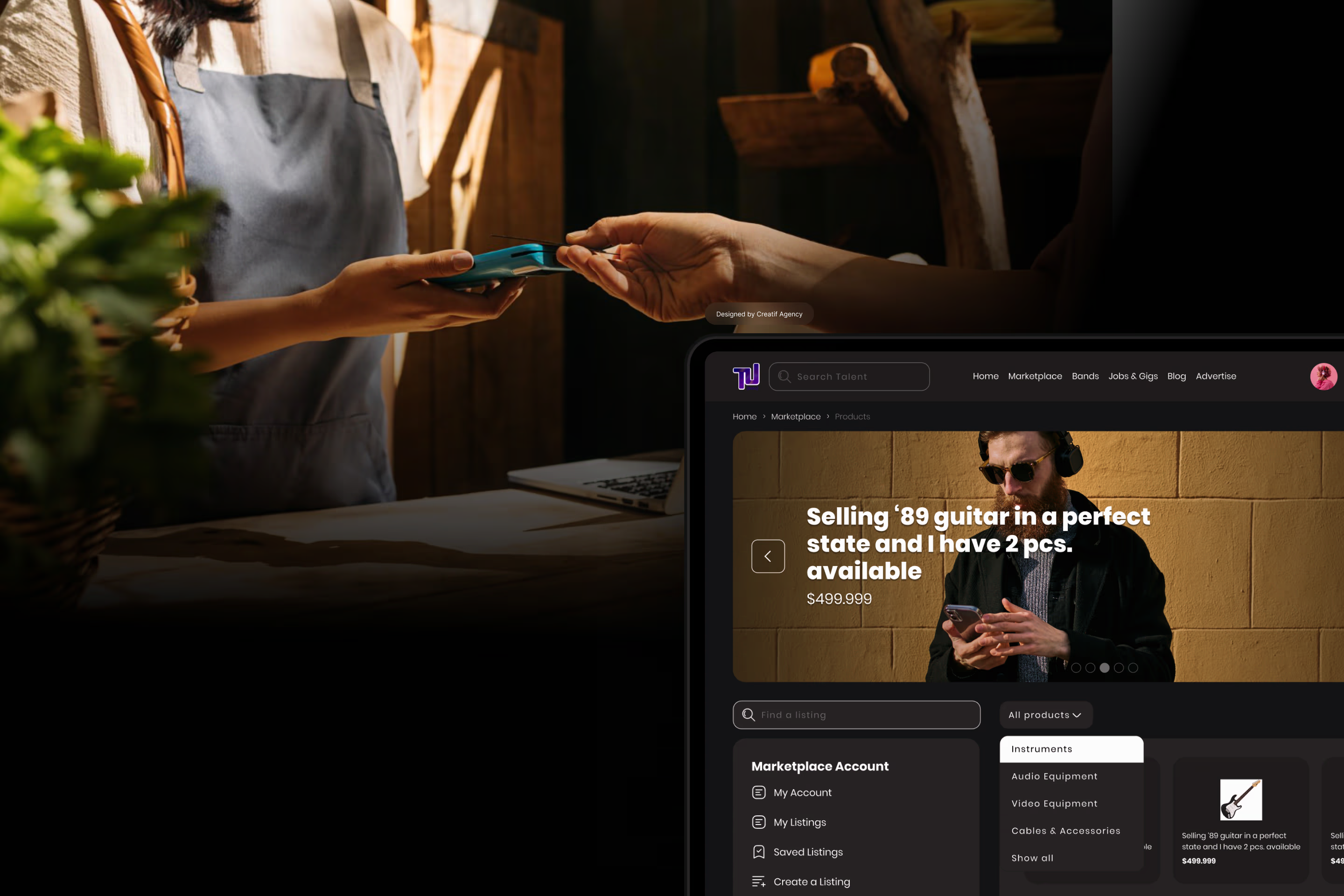
Your website is the first thing an investor, a potential client, or a press contact will check after they hear your name. In London’s startup scene, where first impressions carry real weight and competition is visible on every corner, that page either earns the meeting or ends it. Most startup websites don’t earn it — not because the business isn’t good, but because the site was built before the founders understood what it needed to do.
This guide covers what actually works for London startups in 2026: what to build, what to spend, what to prioritise, and what to skip entirely until you’re ready for it.
What your first website needs to do
A startup website has one job in the early stages: make the right people take you seriously. That means clarity over creativity, credibility over cleverness, and a site that communicates your positioning in seconds rather than paragraphs. The founders who try to build everything at once — full product pages, a blog, a resource library, an investor deck embedded in the footer — end up with a site that says nothing clearly because it’s trying to say everything at once.
The most effective startup websites Creatif has built start with a sharp homepage that answers three questions immediately: what you do, who you do it for, and why you’re credible. Everything else is secondary until those three things are working. If a visitor has to scroll past a hero image, a value proposition carousel, and two testimonial sections before they understand what the company does, the site has already failed its primary function.
Brand first, website second
The single most common mistake London startups make is building a website before the brand is defined. It feels efficient — you need a site up quickly, the brand can come later. But a website built before your brand is defined reflects that lack of clarity to everyone who lands on it. The messaging feels generic, the visual identity feels assembled rather than intentional, and the overall impression is of a company still figuring itself out. If you’re asking investors or clients to take a significant decision based on that first impression, that’s a real problem.
Branding and web design need to be built together or branding needs to come first. At Creatif, every startup project begins with positioning and messaging before a single visual decision is made — because a website built on a clear brand foundation performs differently from one that treats design as decoration. If you want to understand what a proper brand process looks like before you brief anyone, read our guide on inside a branding project at Creatif.
Custom vs template — why it matters more for startups
There’s a strong temptation to build on a template or a no-code builder when you’re moving fast and working with limited capital. For internal tools and MVPs, that logic makes sense. For your public-facing brand, it doesn’t. Templates communicate something to every person who recognises them — and in London’s startup community, investors and senior buyers recognise them instantly. A Webflow template or a Framer starter kit says you prioritised speed over craft, which is a reasonable choice for a prototype but not for a company asking someone to trust them with a contract or a cheque.
A bespoke website built from scratch has no inherited constraints, no visual fingerprints shared with three thousand other companies, and no ceiling on how the brand evolves. It’s built to your specifications, coded to perform, and designed around your audience rather than a generic user. The difference is visible in the first three seconds of a visit, which is precisely when the impression that matters most is formed.
What London startup web design actually costs in 2026
Budget expectations vary enormously in the startup world, often because founders have seen prices ranging from £500 to £50,000 for what appears to be the same thing. The difference is almost always in what’s actually being built. A template-based site with minimal customisation sits at the lower end. A fully custom website with integrated brand strategy, bespoke development, and performance optimisation sits significantly higher. For a detailed breakdown of what’s included at each level, the web design cost guide for London and the broader UK web design cost guide both cover the full picture.
What’s worth understanding at the outset is that the cost of getting the website wrong is higher than the cost of getting it right the first time. A site that needs to be rebuilt six months after launch because it doesn’t reflect the brand, doesn’t convert, or doesn’t hold up under investor scrutiny costs you twice — in money and in the time you lose operating on a site you know isn’t working.
What to build in phases
Not everything needs to be on your site on day one, and trying to build the full vision immediately usually produces a diluted version of it. A more effective approach is to build in clear phases with a defined purpose for each. The first phase is the brand foundation and core site — homepage, about, services or product, and contact. This is the site that earns the right to a conversation. The second phase adds depth: case studies, a structured insights section, and any conversion infrastructure like lead magnets or booking flows. The third phase builds authority over time: SEO-driven content, expanded case study library, and market-specific pages for the regions and sectors you’re growing into.
This phased approach is how Creatif structures startup web design projects — building what’s needed now, designed to scale cleanly rather than requiring a rebuild every time the business grows. London startups that try to build phase three on day one almost always end up back at phase one within a year.
The London market is unforgiving about first impressions
London has one of the most competitive startup ecosystems in Europe. The standard of design in the market is high, buyers are experienced, and investors have seen enough decks and websites to know within seconds whether a company has invested in its positioning or not. That doesn’t mean you need to spend more than your runway allows — it means you need to spend it in the right place. A tight, precise website that communicates clearly will always outperform a bloated one that tries to impress with volume.
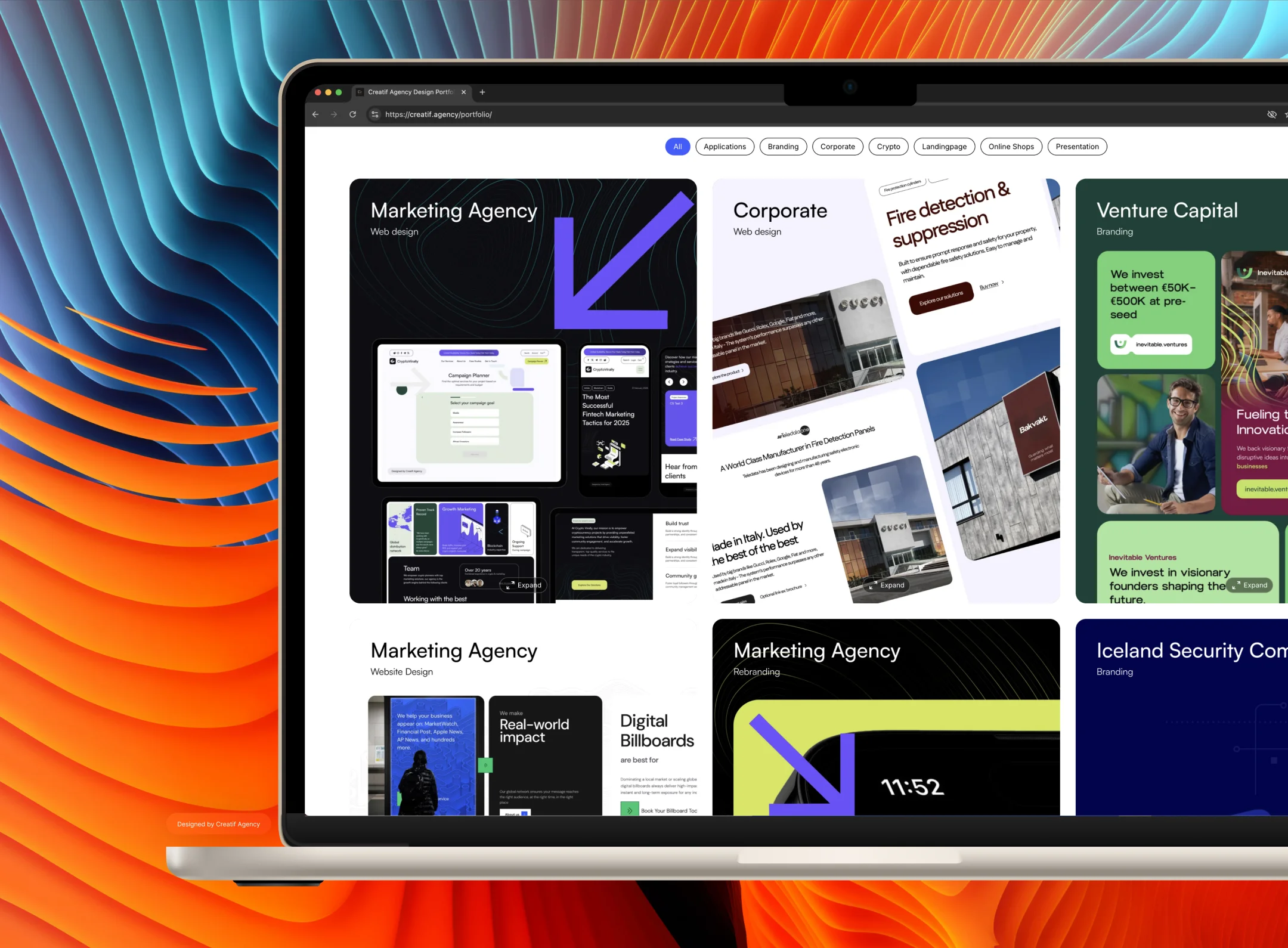
The startups in London that build well from the beginning — with a real brand, a focused website, and a consistent visual identity — find that every subsequent piece of marketing is easier to produce, every sales conversation starts from a stronger position, and every investor meeting begins with a baseline of credibility already established. That’s not a coincidence. It’s the direct return on building something that was designed to perform, not just to exist. To see what that looks like in practice, view the Creatif portfolio or explore the best web design companies in London if you’re still in the process of choosing a partner.
FAQ — web design for London startups
When should a startup invest in a proper website? As early as you’re having conversations with investors, clients, or press. If those conversations are happening and your site doesn’t reflect the quality of your business, you’re losing credibility before the meeting starts.
Should a startup build on a template or go custom? For an internal tool or an MVP, a template is fine. For your public brand — the thing investors and clients judge you on — custom is the right investment. Templates communicate compromise; a custom site communicates intention.
How much should a London startup spend on web design? It depends on scope and stage, but a properly built startup site from a specialist agency in London typically starts from £8,000–£15,000 for a focused brand-and-web project. The full breakdown of what affects cost is covered in the London web design cost guide.
Does a startup need branding before building a website? Yes — if the website needs to work. A site built before the brand is defined will reflect that lack of clarity. The two processes should run in parallel or branding should come first. Creatif handles both under one roof.
How long does a startup web design project take? A focused brand-and-web project with clear decision-making typically takes six to ten weeks from brief to launch. Larger scope or slower approvals extend that timeline.
What makes a startup website actually convert? Clarity of positioning, a specific and credible value proposition, and a design that makes the right next step obvious. Not animation, not parallax, not a long homepage. A visitor who understands what you do and why you’re credible in the first ten seconds is far more likely to reach out than one who had to work to find that information.
If you’re building your first serious website as a London startup — or rebuilding one that isn’t working — talk to the Creatif Agency’s team.