Before the first visual: how Creatif Agency approaches a new brief
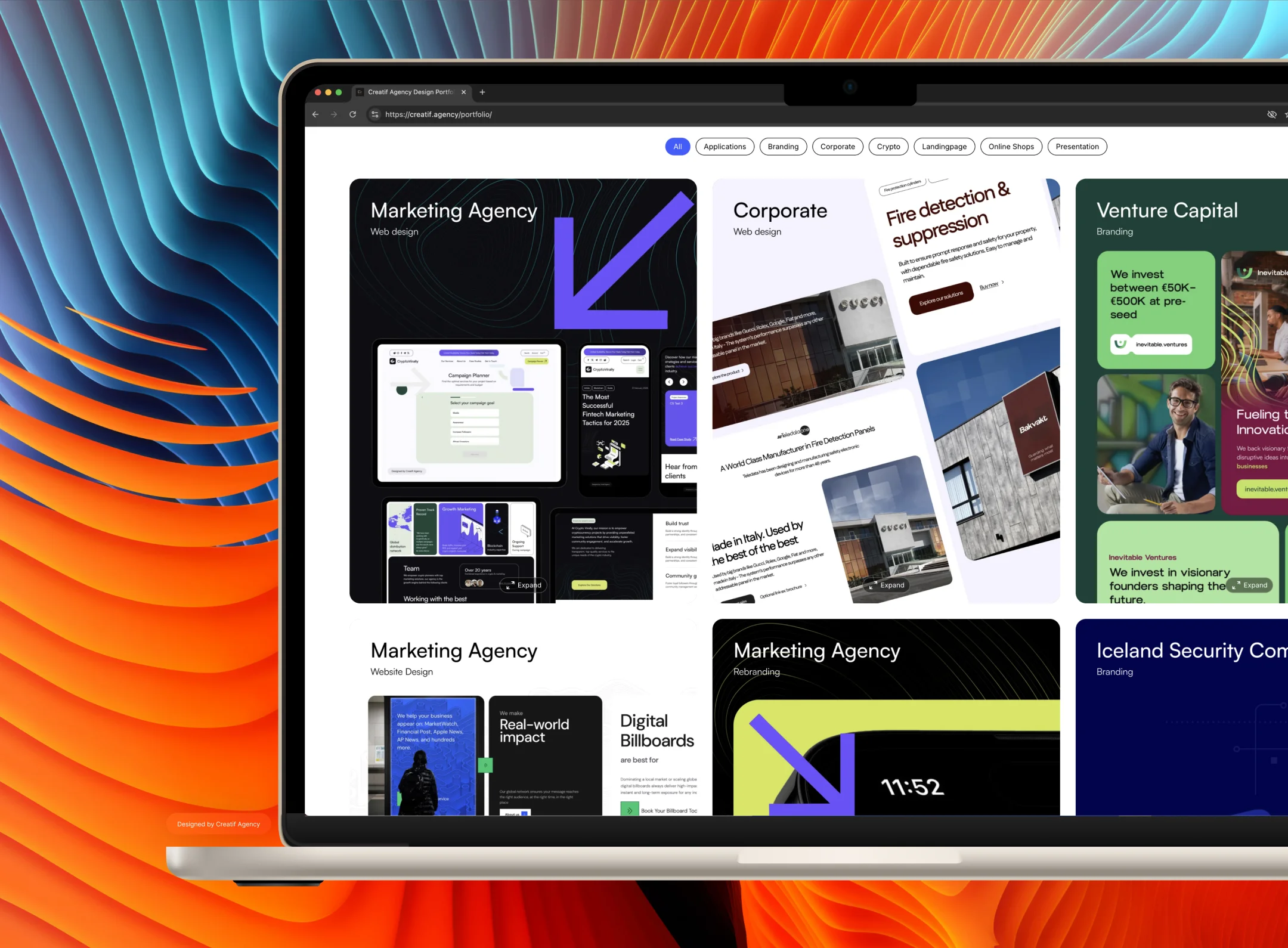
Most agencies open a design tool the moment a brief lands. At Creatif, the first phase of every project is strategy — understanding positioning, audience, and what the brand needs to communicate before a single visual decision is made. This is how we approach every new brief, and why it produces websites and brands that perform rather than just look good.
Most agencies start with design. A mood board, a colour palette, a few homepage layouts to react to. It feels like progress because something visual exists. But a website or brand built on top of unclear positioning, undefined messaging, and an unresolved understanding of the audience will look exactly like what it is — decoration applied to a problem that was never properly diagnosed. At Creatif, the first phase of every project is strategy. Not design. Not development. Not a Figma file. Strategy.
The brief is the beginning, not the instruction
When a new project lands, the first thing we do is interrogate the brief — not execute it. Most briefs, even well-prepared ones, describe what a client wants rather than what the business needs. Those two things are often different. A founder might brief us on a website redesign when the real problem is that the current site has unclear positioning. A startup might ask for a logo when what they actually need is a brand system that can scale across twelve different touchpoints. A corporate might want a new homepage when the underlying issue is that nobody can articulate what makes them different from their three nearest competitors.

Understanding the difference between what’s been asked for and what’s actually needed is the most valuable thing we do in the early stages of a project. It’s also the thing most agencies skip, because it takes longer and produces nothing visual that can be presented in a week one check-in. We think that’s a short-term trade that costs the client dearly in the long run.
Discovery — what we’re actually looking for
Every project at Creatif begins with a structured discovery phase. We look at four things: the offer, the audience, the competitive landscape, and the gap. The offer is what the business actually does and delivers — not the version on the current website, but the version that closes deals and retains clients. The audience is who makes the decision to buy, what they care about, and what they need to believe before they commit. The competitive landscape is what every comparable business is saying and doing, which tells us what’s overused, what’s absent, and where a stronger position can be claimed. The gap is where all three intersect — the space where the brand can stand with clarity and credibility.
This isn’t research for its own sake. Everything we learn in discovery feeds directly into the decisions made in design — the hierarchy of information on the homepage, the language used in headings, the visual weight given to proof points versus service descriptions. A branding project and a web design project both go through this process because both depend on the same foundation. If you want to understand how this maps to a full branding engagement, the detail is in our guide on inside a branding project at Creatif.
Positioning before pixels
Once discovery is complete, we define positioning before we open a design tool. Positioning is a decision — not a tagline, not a mission statement, not a list of values. It answers four specific questions: who the brand is for, what outcome it delivers, why it’s credible, and what makes it different in a way the audience actually cares about. When those four questions have clear, specific answers, every design decision that follows has a reference point. When they don’t, design becomes guesswork dressed up as creativity.
This is where most template-based approaches fail fundamentally. A bespoke website built from a defined position looks and reads differently from one built from a template because the underlying logic is different. The template has no knowledge of the positioning — it’s a visual framework applied regardless of what the business is trying to communicate. The custom build is the positioning, expressed visually.
Messaging before layout
After positioning comes messaging. We define the core value proposition and the messaging hierarchy — what gets said first, what gets said second, and what earns its place deeper in the page. This is one of the highest-return parts of the process because clarity in messaging is what drives conversion. A visitor who understands what you do and why you’re credible within the first ten seconds of landing on your site behaves differently from one who had to work for that understanding.
Messaging also determines structure. The layout of a homepage is not a design decision — it’s a communication decision. What sits above the fold, what the primary call to action is, where social proof appears, how services are framed — all of that follows from the messaging hierarchy, not from a trend or a template. This is why our startup web design projects and our corporate web design projects look and feel structurally different even when built by the same team. The audience is different, the messaging priorities are different, and the layout follows from that.
What clients experience before anything looks like anything
For clients working with Creatif for the first time, the early stages of a project can feel unfamiliar. There’s no mood board in week one. There’s no initial concept to react to. What there is instead is a structured conversation about the business, a series of pointed questions that get to the core of what needs to be communicated, and a positioning and messaging document that both parties align on before design begins. By the time the first visual appears, every decision in it has a reason. Nothing is there because it looked good in isolation — everything is there because it serves the communication goal that was defined in the strategy phase.
This approach takes more time upfront. It also produces websites and brands that don’t need to be rebuilt six months later because they weren’t built on a clear foundation. For businesses that are serious about what they’re building — funded startups in London, established corporates entering new markets, founders building a personal brand that needs to hold up under scrutiny — that trade is straightforward. The work we’re most proud of in the Creatif portfolio started with a discovery phase that took longer than the client expected and produced a result that exceeded what they thought was possible.
FAQ — how Creatif starts a project
Why doesn’t Creatif start with design concepts? Because design without strategy produces attractive work that doesn’t perform. We start with positioning and messaging so that every visual decision has a foundation and a purpose.

How long does the strategy phase take?
It depends on the complexity of the brief and how quickly the client can align on positioning. For a focused startup project it typically takes one to two weeks. For a larger corporate rebrand it can take longer. Either way, time spent here reduces time lost later.
What does Creatif need from a client to start?
A clear brief is helpful but not required — we’ll work with what exists and fill the gaps through discovery. What we do need is access to the person or people who understand the business deeply enough to answer the questions that matter.
Does every project go through this process?
Yes. Whether it’s a full branding and web design project or a focused website build, the strategy phase is not optional. It’s the reason the work performs.
What happens after the strategy phase? Once positioning and messaging are aligned, we move into identity or design — depending on whether the project includes branding. That’s when Figma opens. Not before. Get in touch to discuss how the process would apply to your brief.
More articles



Web designer and co-founder of Creatif Agency. Over a decade working in branding and web design, building custom websites and brand identities for startups and established businesses across Europe and the US. Every article on this site is written from direct experience running projects, not theory.