Branding for London startups: What actually works
Branding for London startups is about earning trust fast in a crowded market, not chasing aesthetics. This guide explains what actually makes a London startup brand stand out, from positioning and messaging to visual identity systems and launch-ready assets. It breaks down the decisions founders should make before design begins, so branding supports fundraising, hiring, and growth.

London is full of smart founders, strong products, and sharp competitors. That is exactly why branding matters more than most startups expect. In London, people judge fast, compare quickly, and move on without hesitation. Your brand has one job at the beginning: make it obvious that you are credible, relevant, and worth a conversation.
Most startup branding fails because it starts with visuals and ends with confusion. A logo can look modern while the positioning stays generic. A website can be designed beautifully while the story remains unclear. The result is a brand that looks fine but does not convert.
Start with the real differentiator, not the feature list
If your positioning sounds like every other startup, no identity system will save it. London buyers and investors hear the same claims every day: faster, smarter, more efficient, AI-driven, next generation. Those phrases are not differentiation, they are noise.
Your differentiator should answer one question in one sentence: why should someone choose you instead of the closest alternative. That sentence should work in a pitch, on a website, in a partnership email, and inside a sales call. If it cannot, your brand will drift across channels and lose trust.

Why London startup branding is harder than most founders expect
London is crowded with capable teams, polished presentations, and strong competitors. That density makes branding less about style and more about being understood quickly. If your positioning is not obvious, you lose attention. If your messaging is generic, you lose trust. If your website feels vague, you lose conversion.
A London startup brand has to do three jobs at once. It must signal credibility, communicate value quickly, and make the next step clear. Branding fails when founders treat it as a logo project. Branding works when it becomes a system that guides decisions across website, product story, sales, hiring, and fundraising.
What branding actually means for a startup
Branding is the set of decisions that shapes how your company is perceived. It is positioning, messaging, identity, and consistency across touchpoints. A logo is one output, but it is not the core. The core is what you stand for, who you are for, and why you are the obvious choice.
For startups, branding is functional. It reduces doubt, shortens decision time, and increases response rates across inbound and outbound. It also makes execution easier because the team stops improvising. In London, where trust is expensive, functional branding becomes a growth advantage.
What actually makes a London startup stand out
Standing out is not about sounding bigger than you are. It is about sounding more precise than your competitors. Precision signals competence. Competence signals trust. Trust creates action.
A brand stands out when it has a sharp category story, a clear differentiator, and a consistent system that appears everywhere. The website should reflect this immediately. If your first screen could describe five other startups, you are invisible. If your claim is bold but unsupported, you look risky. The sweet spot is clarity plus proof.
Start with positioning, because design cannot fix confusion
Most startup websites fail before the user scrolls. The visitor lands, reads the first headline, and feels uncertainty. That uncertainty can be caused by vague category language, abstract benefits, or unclear audience targeting.
Positioning solves that. Positioning is the decision about what you own in the market. It includes your category, your differentiated outcome, and your reason to believe. A good positioning statement can be understood in one pass, repeated by your team, and applied across sales and content.
A practical positioning test is simple. If you remove your brand name, would the statement still uniquely describe you. If the answer is no, you do not have positioning yet. You have a slogan.
Build a messaging hierarchy that matches how people decide in London
London audiences do not read, they scan. They look for relevance and risk reduction. Your messaging has to follow a hierarchy that respects that behavior.
Start with what you do in plain language. Then specify who it is for. Then state the outcome clearly. Then show how it works at a high level. Then provide proof, even if it is limited. Then present a clear next step.
When founders skip this hierarchy, they write clever headlines that feel premium but communicate nothing. That is fatal in London because buyers have alternatives. Messaging that converts is not poetic. It is structured, specific, and repeatable.
The identity system that startups actually need
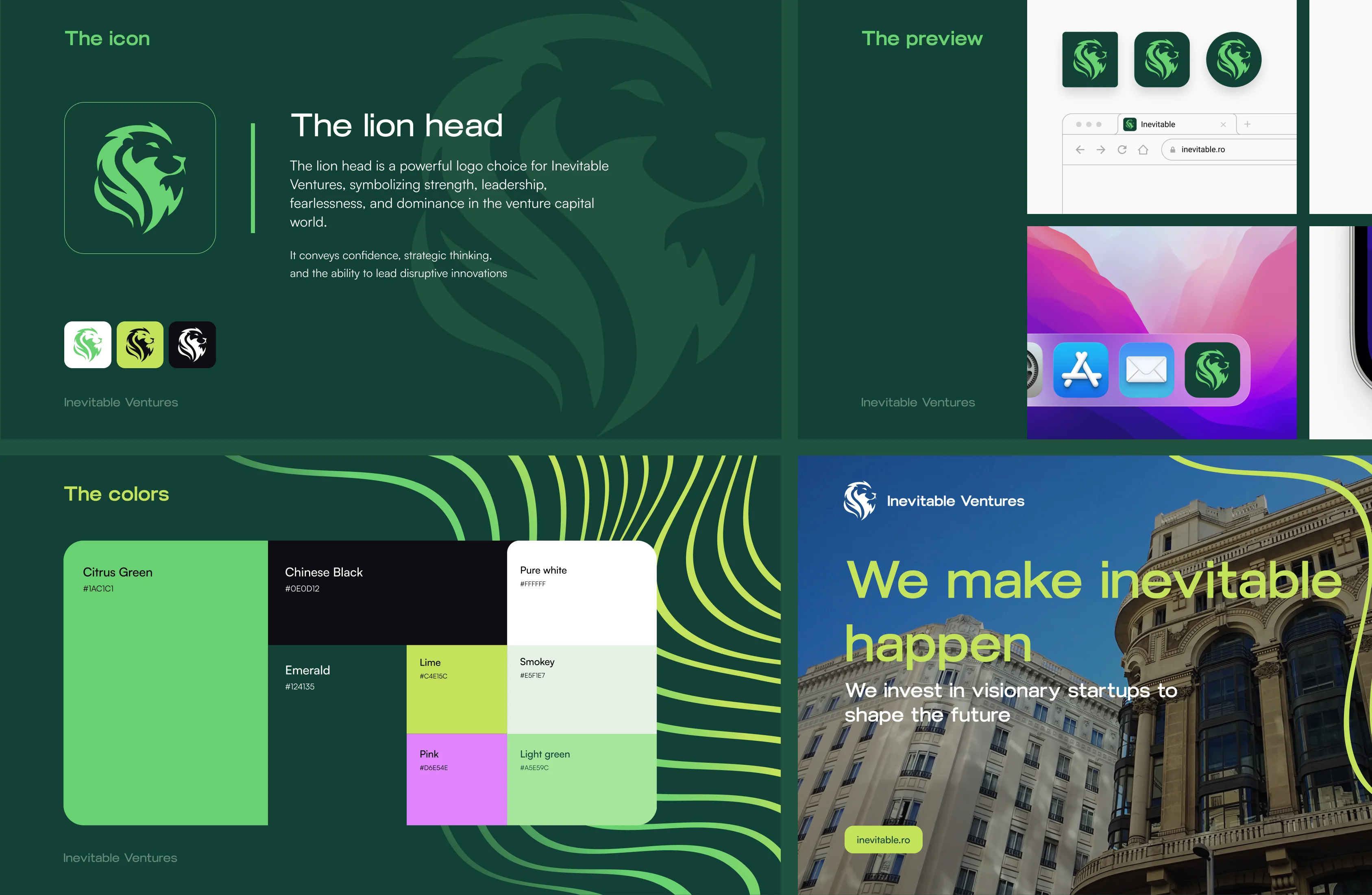
Startups often ask for a logo, color palette, and typography. That is a start, but it is not enough to ensure consistency. London markets punish inconsistency because inconsistency signals immaturity.
A usable identity system includes typography rules, spacing principles, layout logic, component guidelines for web, and a clear image direction. It also includes tone of voice basics that keep copy consistent across pages and assets. The system must be easy to apply without constant designer involvement. If your team cannot execute it, it will drift immediately.
The goal is not to look artistic. The goal is to look coherent at scale.
Investor-ready branding is not polish, it is clarity under pressure
Investors evaluate clarity. A brand becomes investor-ready when the narrative is consistent, the positioning is defensible, and the website supports the story without ambiguity.
An investor-ready website makes the market problem clear, shows your approach, and explains why you are positioned to win. It also shows signs of maturity through structure, not hype. Overclaiming is a red flag. Vague language is also a red flag. Investors prefer a startup that can articulate reality cleanly.
Branding supports fundraising when it signals that founders can make decisions and execute consistently.
Website execution is where most startup branding wins or loses
For London startups, the website is often the first long-form touchpoint. It is the first place where someone checks whether the pitch is real. This includes customers, partners, hires, and investors.
A strong startup website expresses the brand through structure. It has a clear narrative flow, clean CTAs, and pages that support the buyer’s questions. It also loads fast and looks premium on mobile. If your site is slow, your credibility drops instantly. If your site is confusing, your conversion drops instantly.
Your brand should be visible in the system. Typography, spacing, layout, and tone should feel intentional. That is what people register as premium.
What to prioritize at each startup stage
Pre-seed and early MVP stage
Prioritize positioning clarity, messaging hierarchy, and a lean identity system that can be applied immediately. Build a focused website with a sharp first screen, clear use case explanation, and a credible contact path. Avoid overbuilding brand assets you cannot maintain.
Seed and early growth stage
Expand the identity system into reusable components, deepen the messaging architecture, and build content structure that supports SEO and trust. Add proof, case studies, and clearer conversion pathways. Improve consistency across investor materials and hiring assets.
Funded scale-up stage
Upgrade brand system governance. Ensure brand guidelines and design systems can support multiple teams and regions. Align website, campaigns, and product narrative into one coherent system. Reduce dependency on ad-hoc design decisions.
Branding packages London startups actually buy
Foundational brand system
Positioning direction, messaging hierarchy, identity basics, and website-ready brand rules. This is the best starting package for most early-stage teams because it creates clarity and consistency quickly.
Growth brand system
Deeper strategy, expanded identity system, component and template definitions, and application across website and marketing. This package fits funded startups that need consistency across more touchpoints.
Rebrand and reposition package
For startups that evolved beyond the original story. Includes repositioning, narrative rebuild, identity redesign, and rollout plan across website and core assets.
The right package depends on complexity, not ego. Buying more than you can apply creates waste.
London startup branding costs and what influences the budget
Branding cost is not driven by the logo. It is driven by scope and decision complexity. A simple product with one audience and one offer costs less to brand than a multi-segment company with multiple stakeholders.
Budget increases with strategy depth, naming requirements, number of templates, amount of collateral, and how many approval cycles are needed. It also increases when founders are unclear, because the project becomes a discovery process. That is not a problem, but it is real.
How much does a branding agency cost in London – 2026 update
Cheap branding usually becomes expensive later because it creates inconsistency, redesign debt, and marketing waste. In London, that waste shows up quickly because competition is unforgiving.
What to do next if you want a brand that stands out in London
If your current brand feels generic, inconsistent, or unclear, the solution is not a logo refresh. The solution is a positioning-led system that your team can execute consistently across website and marketing.
Start with positioning clarity and messaging hierarchy. Build a lean identity system that scales. Translate it into a website that performs and guides action. Then expand as growth demands it. That is what actually helps a London startup stand out.
Frequently asked questions
What is the most important part of startup branding in London?
Positioning and messaging clarity matter most because London audiences decide quickly. Design supports clarity, but it cannot replace it.
Do London startups need branding before product-market fit?
They need clarity before scale. A lean brand system helps communicate the offer and build trust, without overinvesting in assets too early.
What should a London startup website include?
A clear homepage narrative, product or service explanation, proof signals, use cases, and one obvious next step. Speed and mobile experience are mandatory.
How can branding support fundraising?
Branding supports fundraising by making the story coherent, the positioning defensible, and the website credible. Investors fund clarity and execution signals.
How long does startup branding take?
Timelines depend on scope and stakeholder availability. A foundational system can be completed faster than a full reposition and rollout.
Can branding and web design be done together?
Yes. It often performs better because positioning, messaging, identity, and UX architecture stay aligned through implementation. Contact us to discuss your project.
Startup branding in London: Strategy, identity, and investor-ready credibility