Shopify vs custom ecommerce — which is right for your business?
It’s one of the first questions any business faces when building an online store — and one of the most consistently misanswered. The honest answer is that Shopify is the right choice for the vast majority of ecommerce businesses, and a fully custom platform is right for a specific set of situations where Shopify’s structure genuinely can’t accommodate what the business needs. The decision isn’t about prestige or budget — it’s about fit. This guide breaks down the real differences so you can make the right call before you invest.
What Shopify actually is
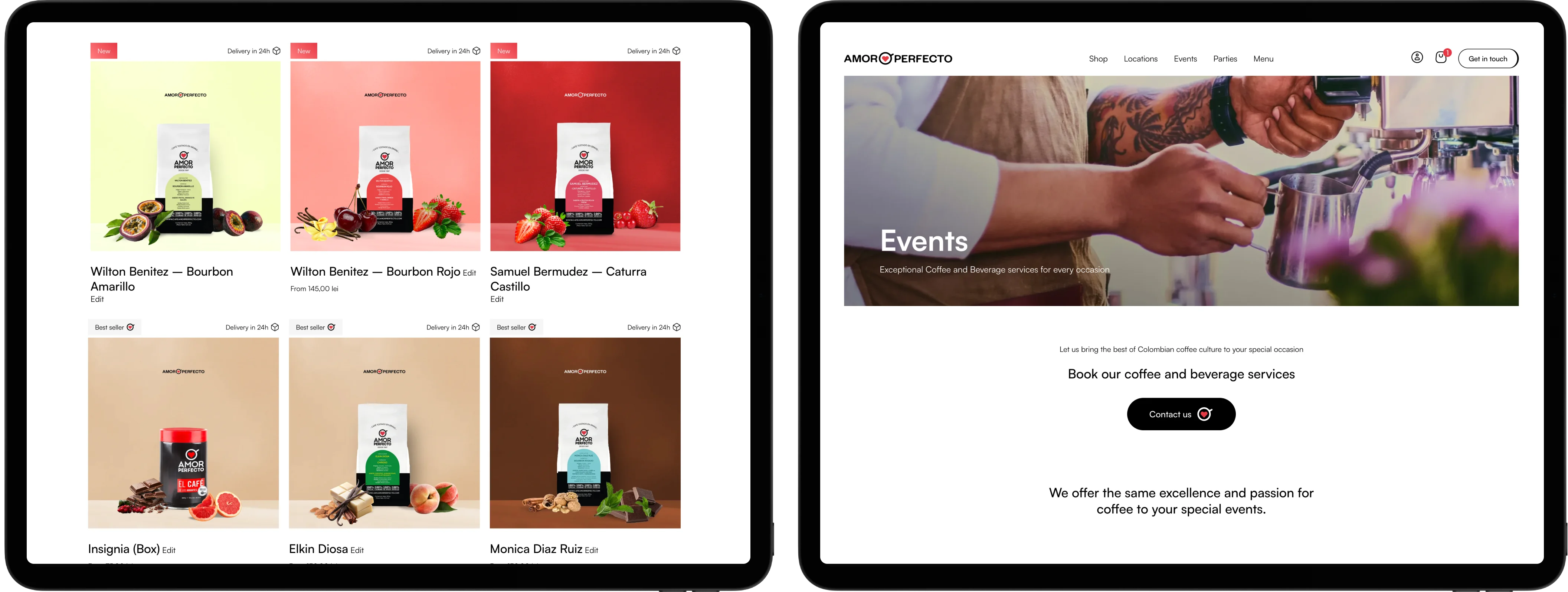
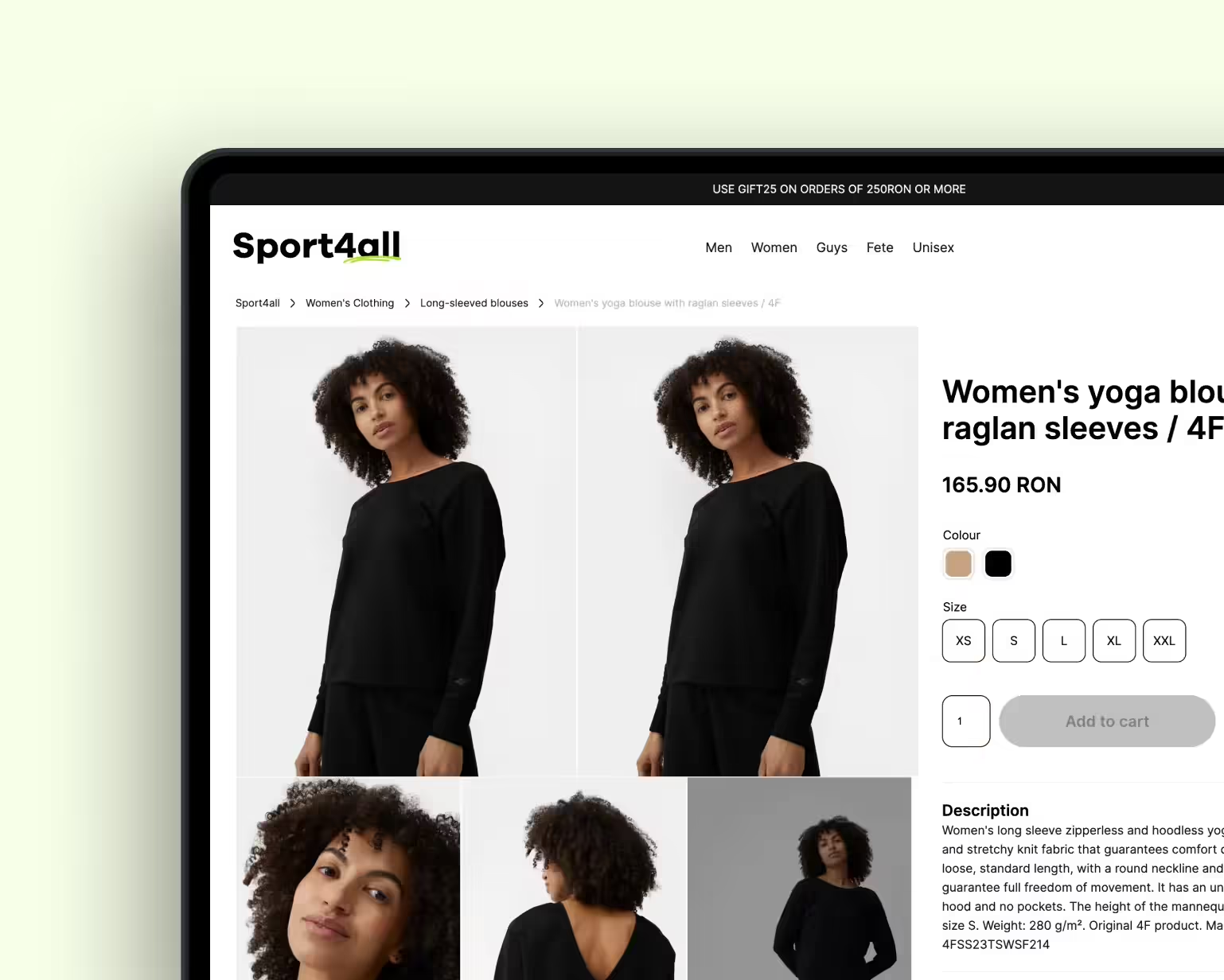
Shopify is the world’s most widely used ecommerce platform — and for good reason. It handles payments, inventory, shipping, tax, and checkout infrastructure out of the box, which means the business can focus on products, marketing, and customers rather than on building and maintaining ecommerce infrastructure from scratch.

It’s fast to launch, reliable at scale, and supported by a mature ecosystem of integrations and apps that cover the vast majority of ecommerce requirements without custom development.
For businesses launching their first serious online store, scaling an existing one, or moving from a weaker platform, Shopify is a proven, capable foundation — particularly when it’s designed and built properly rather than launched on a generic theme. That’s precisely why
Creatif Agency offers Shopify web design as a core service — it’s the right platform for the ecommerce clients who are looking for a quick and performing solution.
What custom ecommerce actually is
A custom ecommerce platform is built from the ground up — no Shopify, no themes. The database structure, the product logic, the checkout flow, the user accounts, the integrations — everything is architected specifically for the business’s requirements.
It’s the most expensive option by a significant margin, it takes the longest to build, and it requires ongoing technical resource to maintain and develop. It is also, for a specific set of businesses, the only option that works — because their requirements are genuinely beyond what any platform can handle structurally.
When Shopify is the right choice
Shopify works exceptionally well for the majority of ecommerce businesses. If you’re selling physical products, digital products, or subscriptions — regardless of catalogue size — Shopify’s infrastructure handles it. If your checkout flow is standard, your product logic is straightforward, and your primary need is a high-quality, fast, conversion-optimised store that reflects your brand and performs in search, Shopify is the right choice.
It’s also the right choice if speed to market matters, if the budget for a full custom build isn’t available yet, or if the business is at a stage where proving ecommerce viability matters more than having bespoke infrastructure.
When custom ecommerce makes sense
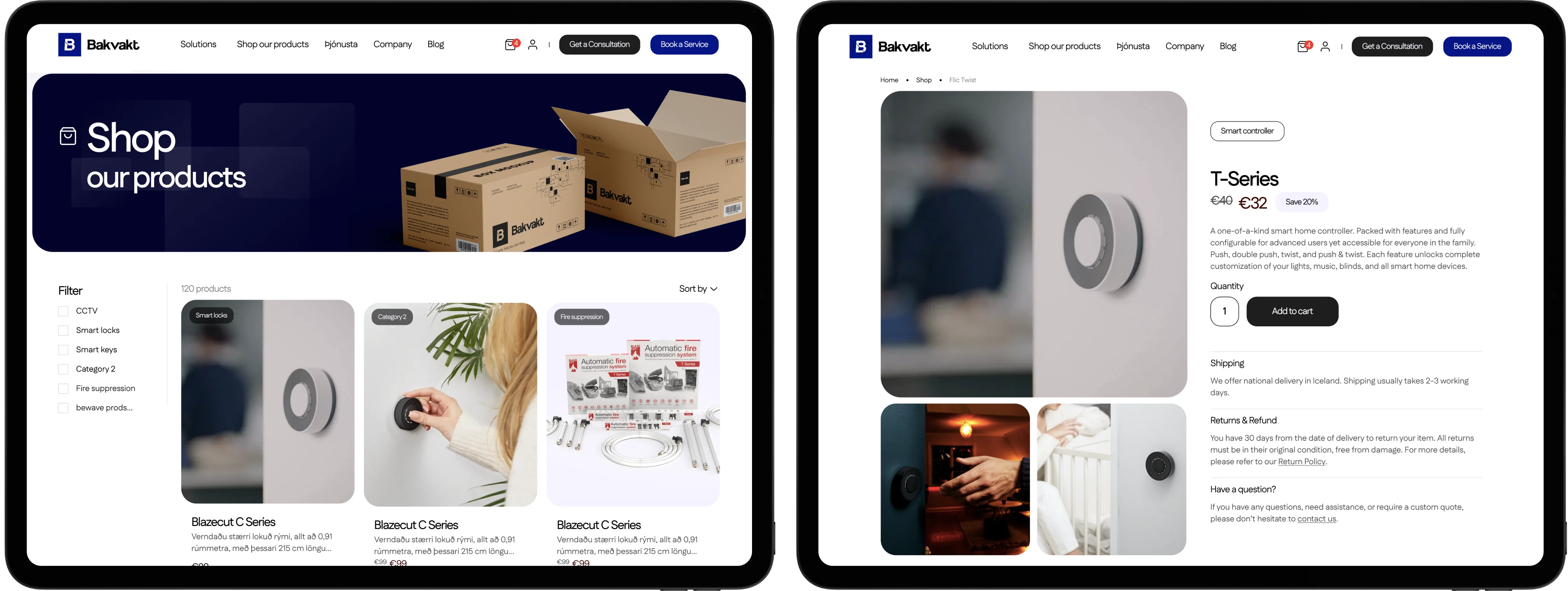
A fully custom ecommerce build makes sense when the business has structural requirements that Shopify genuinely cannot meet. Complex B2B purchasing logic — tiered pricing, account-specific catalogues, quote-based ordering, multi-entity invoicing — often requires a custom platform because the underlying data model is too far from what Shopify was built for. Marketplace models where multiple vendors list products, highly complex configuration logic where products are assembled from dozens of variables, or platforms where ecommerce is deeply integrated with proprietary business systems are all situations where a custom build may be the only viable path.
The test is simple: if what the business needs to do is structurally different from selling products through a standard checkout, a custom platform deserves serious consideration.

If the requirements are about design quality, brand expression, conversion optimisation, or catalogue scale — Shopify, built properly, handles all of it. The mistake most businesses make is choosing custom because it sounds more serious or more premium, not because the requirements actually demand it.
The cost difference
The cost gap between the two options is substantial and worth understanding clearly before making a decision. A professionally designed Shopify store from Creatif Agency starts from €2,500 for a focused project and can scale to €10,000+ for larger builds with full brand integration and advanced functionality.
A fully custom ecommerce platform starts at €5,000 and routinely reaches €15,000 or beyond for complex builds with extensive backend requirements.
Ongoing costs differ significantly too — Shopify’s monthly platform fee is predictable and inclusive of hosting, security, and core infrastructure, while a custom platform requires dedicated hosting, ongoing development resource, and continuous maintenance investment.
For a full breakdown of what affects ecommerce investment at each level, read the premium website cost guide and the Shopify store cost guide.
What Creatif Agency builds and for whom
Creatif Agency designs and develops Shopify stores for businesses that want a high-quality, professionally built ecommerce presence — and fully custom ecommerce platforms for businesses whose requirements genuinely demand it.
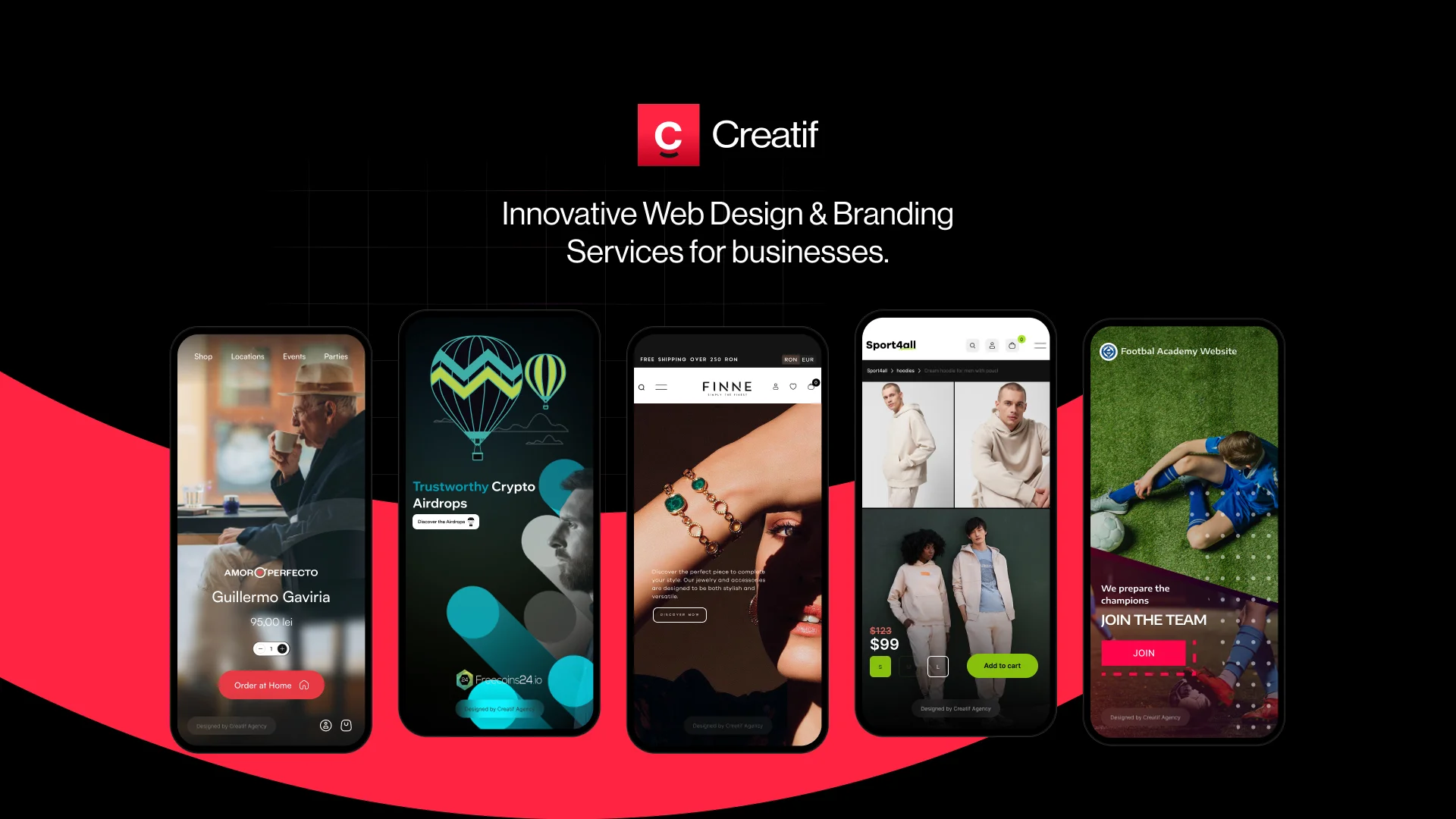
Both are built entirely in-house, with the same standard of strategy, design, and development applied regardless of platform. The decision on which direction is right is something we work through with every client at the start of the project — because the right answer depends on the specific business, its requirements, and where it’s going. Contact our team to discuss your brief, or explore the Creatif Agency portfolio to see the work across both.
FAQ — Shopify vs custom ecommerce
Is Shopify good enough for a serious ecommerce brand?
Yes — when it’s designed and built properly. A professionally designed Shopify store with a strong brand foundation, custom design, and clean development performs at a level most businesses never need to exceed. The platform handles the infrastructure; the design and strategy determine whether it converts.
What are the main reasons to choose custom ecommerce over Shopify?
Complex B2B purchasing logic, marketplace models with multiple vendors, deeply integrated proprietary systems, or product configuration requirements that are structurally beyond what Shopify can handle. If the requirements are about design quality or catalogue scale, Shopify is almost always the right choice.
How much more does custom ecommerce cost than Shopify?
Significantly more. A Shopify website store starts from €2,500. A custom ecommerce platform starts at €5,000 and scales well beyond €10,000 for complex builds. The ongoing cost difference is equally significant.
Can a Shopify store look fully custom and on-brand?
Yes — when it’s designed from scratch rather than adapted from a theme. Creatif Agency designs every Shopify store as a custom visual system built around the brand. See the Shopify web design service for detail on what’s included.
How do I know which option is right for my business?
The honest answer comes from understanding your specific requirements — what the store needs to do structurally, what your budget allows, and where the business is going. Creatif Agency works through that conversation at the start of every project.
Does Creatif Agency build both Shopify stores and custom ecommerce platforms?
Yes — both entirely in-house, with the same standard of design and development applied to each. The platform decision is made based on what the business actually needs, not on what’s easier or more profitable to deliver.
More articles




Web designer and co-founder of Creatif Agency. Over a decade working in branding and web design, building custom websites and brand identities for startups and established businesses across Europe and the US. Every article on this site is written from direct experience running projects, not theory.