How Creatif Agency designs a Shopify product pages that converts
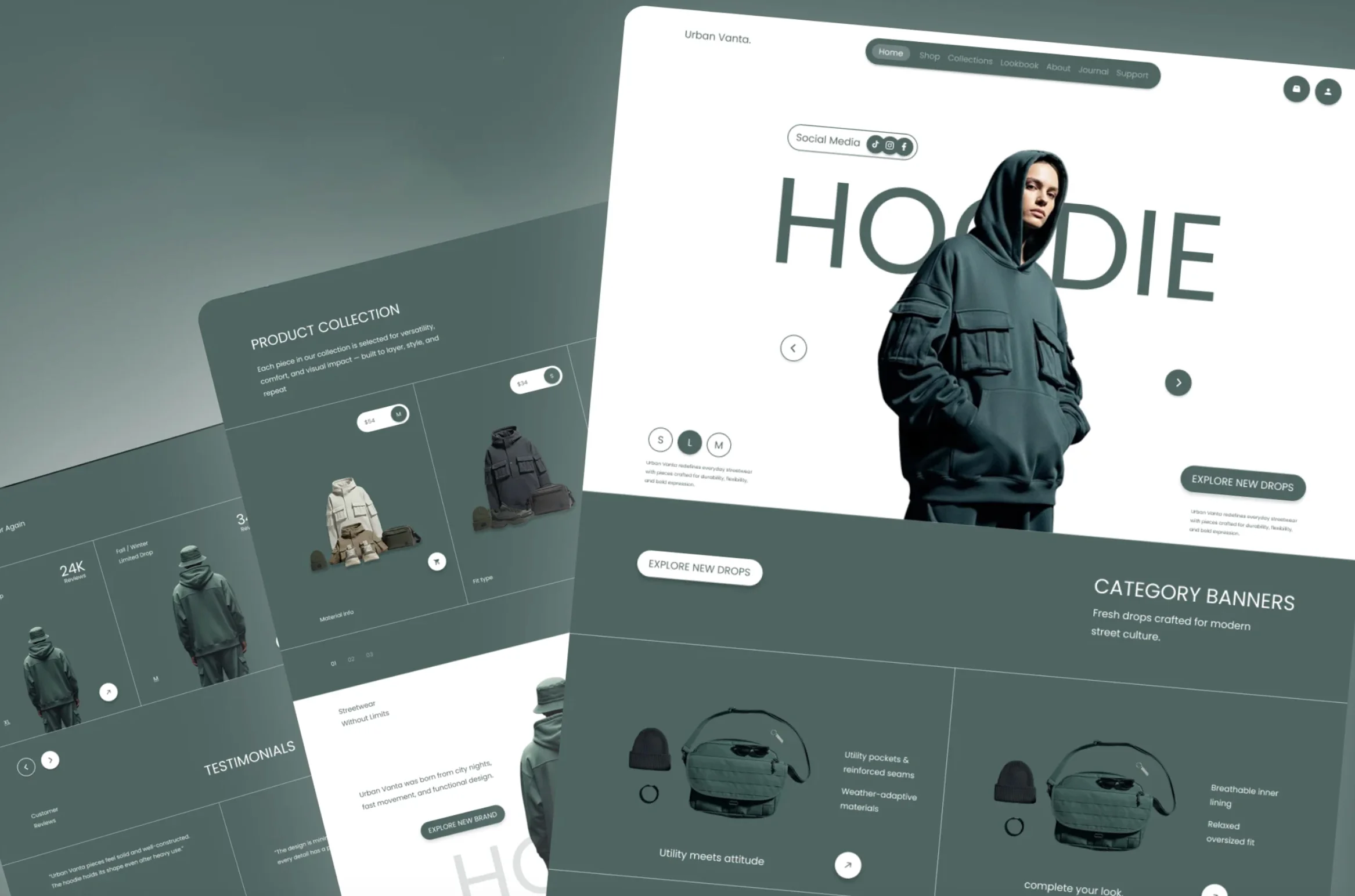
A Shopify product page that converts is built around how your specific customers evaluate and decide — not around a generic layout. Creatif Agency designs every product page from scratch: clear hierarchy, trust signals in the right place, a frictionless path to purchase, and a design rooted in the brand. This is the exact process we follow and why it produces results that theme-based product pages consistently don't.
The product page is where the sale is won or lost. Every visitor who reaches it has already cleared the hardest hurdle — they found your store, they engaged with your brand, they clicked on a product. What happens on that page determines whether the interest becomes a purchase or a back button.
Most Shopify product pages lose that moment — not because the product is wrong, but because the page wasn’t designed around how real buyers actually decide. This is exactly how Creatif Agency approaches it.

The product page is a decision page, not a display page
The most common mistake in ecommerce design is treating the product page as a place to display information. It isn’t. It’s a place to resolve doubt. Every element on the page — the images, the copy, the social proof, the call to action, the supporting content — exists to address the specific objections and uncertainties your buyer has at the moment they’re deciding whether to purchase. A display page shows the product. A decision page removes the reasons not to buy. The gap between those two approaches is where conversion rate lives.
This distinction shapes every design decision Creatif Agency makes on a product page. Before we design a single element, we understand the buyer — what they know when they land, what they’re uncertain about, what would make them hesitate, and what would make them commit. That understanding comes from the strategy phase that opens every project, and it’s the reason our product pages perform differently from ones built on a generic template. The full picture of how that strategy phase works is covered in before the first visual: how Creatif approaches a new brief.

Hierarchy — what appears first and why
The hierarchy of a product page is not a design preference. It’s a communication decision rooted in how buyers process information. Above the fold — the portion of the page visible before any scrolling — needs to contain everything required to make the initial commitment to engage: the product name, the primary image, the price, the key proof point, and the purchase action. Nothing above the fold should require the buyer to scroll to understand what they’re looking at or why they should want it.
Below the fold is where the page earns the sale for the buyer who needs more before they commit — detailed imagery, product specifications, social proof, sizing or variant information, brand story context, and answers to the questions that commonly prevent purchase. The ordering of these elements is not arbitrary. It follows the natural progression of a buyer’s decision process — from initial interest to active evaluation to confidence to action. Every section earns its position by serving the next step in that journey.
Images — the element that does the most work
In ecommerce, the image is the product. A buyer cannot touch, hold, or try what they’re considering. The photography and visual presentation of the product are doing the work that a physical retail environment would do — communicating quality, communicating scale, communicating the experience of ownership. Creatif Agency designs product image structures that go beyond a single hero shot and a few alternates. Contextual imagery showing the product in use, detail shots that communicate material and finish quality, scale references that resolve ambiguity — these are not additional nice-to-haves, they are conversion infrastructure.
The image gallery structure on a custom product page is also designed specifically for the product category. A jewellery store requires a different image hierarchy from a technical equipment supplier. A fashion brand requires a different image treatment from a food or beverage brand. Because every store Creatif builds is custom from the ground up, the image structure is designed for the product, not adapted from a generic template that treats every product category the same way.
Trust signals — placement is everything
Social proof, guarantees, certifications, and trust indicators work only when they appear at the moment of doubt — not decoratively, not in the footer, not in a separate reviews tab that requires an extra click. A review summary placed immediately below the product title addresses doubt at the point of first evaluation. A delivery guarantee placed adjacent to the add-to-cart button addresses the last hesitation before purchase. A returns policy placed near the size selector addresses the specific friction point of committing to a size online.
The placement of every trust signal on a Creatif product page is determined by when in the decision process the doubt it addresses is most acute — not by convention, not by what the theme section allowed, and not by what looked balanced in the layout. This level of precision is only possible when the page is designed from scratch around the specific buyer journey for that specific product, which is why it’s one of the clearest practical differences between a custom Shopify store and a theme-based one.

The path to purchase — removing friction at every step
The call to action on a product page is the culmination of everything the page has done to build confidence. Its design, its copy, its placement, and the experience that follows it — the add-to-cart confirmation, the cart drawer or page, the checkout entry — are all part of a single conversion flow that should feel effortless. Any friction in that flow — an unclear button, an unexpected redirect, a cart experience that breaks the momentum — costs sales. Creatif designs the full path from product page to checkout as a single coherent experience, not as a series of disconnected template sections stitched together.
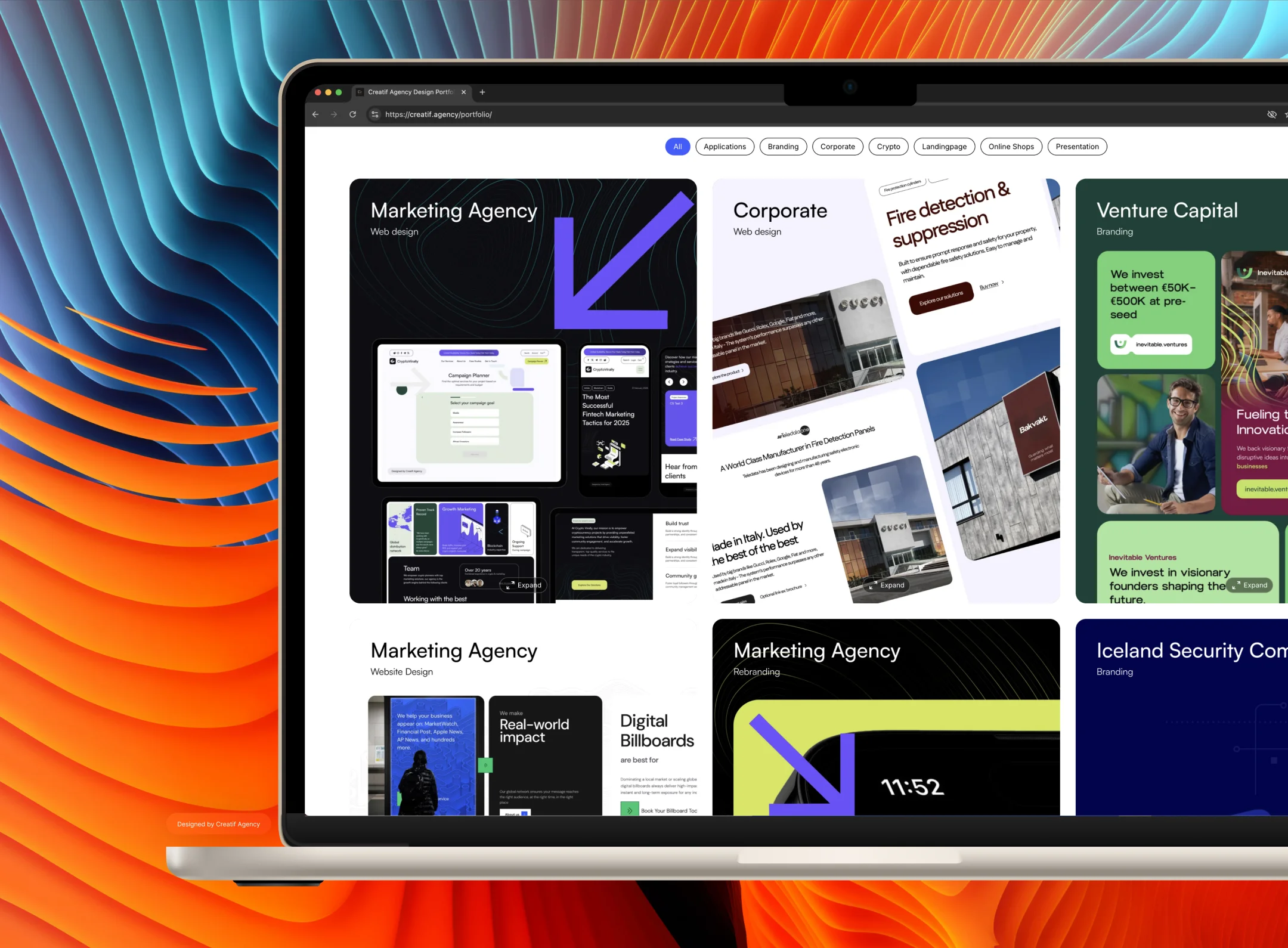
This is particularly important on mobile, where over 70% of Shopify purchases happen and where the margin for friction is smallest. A thumb-friendly layout, appropriately sized touch targets, a sticky add-to-cart element that stays accessible as the buyer scrolls through product detail — these are decisions that directly affect conversion and that only work when the page is built specifically for mobile behaviour, not when a desktop layout has been made responsive as an afterthought. You can see this applied across ecommerce projects in the Creatif Agency portfolio, and understand what drives the investment in the custom Shopify store cost guide.
FAQ — Shopify product page design
What makes a Shopify product page convert? A clear hierarchy that puts the right information above the fold, trust signals placed at the moment of doubt, imagery that communicates quality and resolves uncertainty, and a frictionless path from interest to purchase — designed around how your specific buyers actually decide.
Why do most Shopify product pages underperform? Because they’re designed for generic products and generic buyers. The layout, the trust signal placement, and the image structure are all predetermined by the theme rather than designed around the specific audience.
Does Creatif Agency design product pages from scratch? Yes. Every product page layout Creatif builds is custom — designed around the brand, the product category, and the buyer journey.
How important is mobile design for Shopify product pages? Critical. Over 70% of Shopify purchases happen on mobile. A product page that wasn’t designed specifically for mobile behaviour — not just made responsive, but genuinely designed mobile-first — is losing a significant portion of its potential revenue.
How does Creatif approach a Shopify product page brief? Strategy before design, always. Understanding the buyer, the product, and the specific objections the page needs to resolve before any visual decisions are made. The full process is covered in before the first visual: how Creatif approaches a new brief.
What does a custom Shopify product page cost? Product page design is scoped as part of the full store project. The Shopify website store cost guide covers the full pricing picture by project type and scope. Contact Creatif Agency to discuss your specific brief.
More articles





Web designer and co-founder of Creatif Agency. Over a decade working in branding and web design, building custom websites and brand identities for startups and established businesses across Europe and the US. Every article on this site is written from direct experience running projects, not theory.